
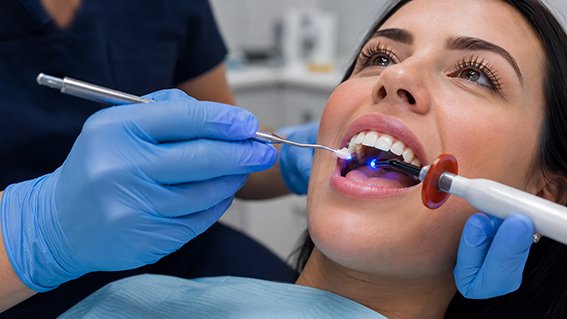
Composite Bonding in Antalya: Transform Your Smile in a Single Session
Small gaps, chipped edges, uneven tooth shapes, minor misalignment, and permanent discolouration can affect the overall appearance of your smile. However, improving these imperfections does not always require extensive tooth preparation or several dental appointments.
Composite bonding is a fast, minimally invasive, and effective cosmetic dental treatment that can often transform your smile in just one session.
At Lisa Smile Studio in Antalya, composite bonding treatments are individually planned according to your facial features, natural tooth structure, smile line, and aesthetic expectations. In many suitable cases, patients can enter the clinic with damaged or uneven teeth and leave on the same day with a more balanced, natural, and confident smile.
Your treatment journey can also be supported by our VIP airport transfer and accommodation services, helping you enjoy a comfortable and carefully organized dental experience in Antalya.
What Is Composite Bonding?
Composite bonding, also known as dental bonding or cosmetic bonding, is a treatment in which tooth-coloured composite resin is applied directly to the surface of the teeth.
The material is carefully shaped, hardened, and polished by the dentist to improve the colour, size, length, shape, and symmetry of the teeth.
Unlike crowns or porcelain veneers, composite bonding usually requires little or no removal of healthy tooth structure. In many cases, the treatment can be completed without drilling or local anaesthesia.
Because the composite material is applied directly to the teeth inside the clinic, there is generally no need to wait for restorations to be produced in a dental laboratory.
Can Composite Bonding Be Completed in One Session?
One of the main advantages of composite bonding is that it can often be completed in a single dental appointment.
The exact treatment time depends on:
- The number of teeth being treated
- The amount of reshaping required
- The condition of the natural teeth
- The patient’s bite
- The complexity of the smile design
- Whether additional treatments are needed
Minor bonding procedures on one or two teeth may be completed quickly. A full composite bonding smile makeover involving several teeth may require a longer appointment.
In more complex cases, an additional consultation, digital planning appointment, or follow-up visit may be recommended. However, many patients can achieve a noticeable smile transformation within the same day.
What Dental Problems Can Composite Bonding Correct?
Composite bonding may be suitable for correcting:
- Small gaps between teeth
- Chipped or broken tooth edges
- Uneven tooth lengths
- Small or narrow-looking teeth
- Mildly crooked teeth
- Worn front teeth
- Irregular tooth shapes
- Minor surface cracks
- Localized discolouration
- Asymmetrical smile lines
- Old or damaged composite restorations
Composite bonding is especially effective for minor and moderate cosmetic concerns. More significant tooth damage, severe misalignment, or major bite problems may require alternative treatments.
Composite Bonding Treatment Process
1. Consultation and Smile Assessment
The treatment begins with a detailed dental examination.
Your dentist evaluates your teeth, gums, bite, enamel condition, tooth proportions, and smile expectations. Digital photographs, scans, or X-rays may be taken when required.
It is important to ensure that the teeth and gums are healthy before cosmetic bonding is performed.
2. Colour Selection
A composite shade is selected to match your natural teeth or achieve the brighter appearance included in your smile plan.
If you are also considering professional teeth whitening, whitening may be recommended before composite bonding because the composite material does not change colour after it has been applied.
3. Minimal Tooth Preparation
In most cases, very little preparation is required. The tooth surface is gently cleaned and prepared to create a strong bond between the natural tooth and the composite material.
Composite bonding generally does not require significant tooth reduction. Local anaesthesia is often unnecessary unless decay, sensitivity, or another dental procedure is involved.
4. Composite Application
The tooth-coloured composite resin is applied directly to the tooth in layers.
Your dentist carefully sculpts the material to improve the tooth’s length, width, contour, and overall position within the smile.
This stage requires detailed artistic and technical planning because each tooth must look balanced alongside the surrounding teeth, lips, and facial features.
5. Hardening the Material
A special dental curing light is used to harden each layer of composite resin.
Once the material has been hardened, additional shaping and adjustments can be made to achieve the planned result.
6. Shaping and Polishing
The bonded teeth are carefully shaped and polished to produce a smooth, natural-looking surface.
Your bite is also checked to make sure the new restorations do not create uncomfortable or excessive pressure.
Final photographs may be taken so you can compare your smile before and after treatment.
Advantages of Composite Bonding
Composite bonding offers several cosmetic and practical advantages:
- Can often be completed in one session
- Provides an immediate smile transformation
- Usually requires little or no tooth reduction
- Preserves natural tooth structure
- May not require local anaesthesia
- No laboratory waiting period in most cases
- Repairs chips, gaps, and uneven edges
- Creates more symmetrical tooth shapes
- Can be adjusted or repaired when necessary
- More affordable than porcelain veneers
- Produces natural-looking results
- Suitable for several teeth or a single damaged tooth
The treatment is often preferred by patients who want to improve their smile without committing to a more invasive restorative procedure.
Composite Bonding vs Laminate Veneers
Both composite bonding and laminate veneers can improve the shape, colour, and symmetry of the teeth. However, the treatments use different materials and techniques.
Composite Bonding
- Applied directly to the teeth by the dentist
- Often completed in one appointment
- Usually requires minimal or no tooth preparation
- More affordable than porcelain veneers
- Easier to repair or adjust
- May stain or lose polish over time
- Requires periodic maintenance
Laminate Veneers
- Produced from porcelain in a dental laboratory
- Usually require several appointments
- Offer greater stain resistance
- Maintain their shine for longer
- Provide high light transmission and translucency
- May require a small amount of enamel preparation
- Generally offer a longer-lasting cosmetic solution
Composite bonding may be ideal for patients looking for a quick and minimally invasive transformation. Laminate veneers may be preferred by patients who want greater stain resistance, durability, and long-term colour stability.
At Lisa Smile Studio, your dentist will evaluate your teeth and explain which option is more appropriate for your dental condition, budget, and expectations.
Composite Bonding vs Dental Crowns
Composite bonding is generally used to improve minor cosmetic imperfections while preserving the natural tooth.
Dental crowns cover the entire visible part of the tooth and are usually recommended when a tooth is significantly damaged, weakened, heavily filled, or structurally compromised.
Composite Bonding May Be Suitable For:
- Small chips
- Minor gaps
- Uneven edges
- Mild shape problems
- Cosmetic smile improvements
Dental Crowns May Be Suitable For:
- Severely broken teeth
- Large existing fillings
- Root canal-treated teeth
- Significant structural weakness
- Major changes in tooth shape or bite
Your dentist will always aim to select the most conservative treatment that can safely achieve the desired result.
Does Composite Bonding Look Natural?
When carefully planned and applied, composite bonding can create a highly natural result.
Modern composite materials are available in different shades, translucencies, and enamel effects. These layers can be combined to reproduce the appearance of natural tooth structure.
The final result depends on several factors, including:
- The quality of the composite material
- The dentist’s shaping technique
- Colour selection
- Tooth proportions
- Surface texture
- Polishing quality
- The patient’s natural smile line
The goal is not simply to make the teeth larger or brighter. Each bonded tooth should complement the patient’s face and surrounding natural teeth.
Is Composite Bonding Painful?
Composite bonding is generally a comfortable and minimally invasive procedure.
Because little or no tooth structure is removed, local anaesthesia is often not required. Patients usually experience no significant discomfort during treatment.
Temporary sensitivity may occasionally occur, especially when bonding is combined with other dental procedures. Any mild sensitivity generally improves within a short period.
How Long Does Composite Bonding Last?
Composite bonding can remain functional and attractive for several years with proper care. However, its lifespan varies from patient to patient.
The durability of the treatment depends on:
- The number and position of bonded teeth
- Bite pressure
- Teeth grinding or clenching
- Oral hygiene
- Smoking habits
- Consumption of staining foods and drinks
- Biting hard objects
- Regular dental maintenance
- The amount of composite material used
Composite bonding is not as stain-resistant or wear-resistant as porcelain. Over time, it may require polishing, small repairs, adjustments, or replacement.
Patients who grind or clench their teeth may be advised to use a protective night guard.
Can Composite Bonding Stain?
Composite resin can gradually absorb colour pigments and become stained over time.
Frequent consumption of coffee, tea, red wine, dark sauces, and tobacco products may affect the brightness of the bonded teeth.
Unlike natural teeth, composite restorations cannot be whitened using regular teeth whitening treatments. However, they can often be professionally polished to improve their surface and brightness.
If significant colour changes occur, the bonding material may need to be repaired or replaced.
How to Care for Composite Bonding
To protect your composite bonding results:
- Brush your teeth at least twice a day
- Use dental floss or interdental brushes
- Attend regular dental check-ups
- Have professional dental cleaning when recommended
- Avoid biting ice or very hard foods
- Do not use your teeth to open packaging
- Avoid biting pens or pencils
- Reduce smoking and tobacco use
- Limit strongly coloured foods and drinks
- Use a night guard if you grind your teeth
Good oral hygiene and careful daily habits can help extend the life of your composite bonding treatment.
Can Composite Bonding Break or Chip?
Composite bonding is durable enough for normal daily use, but it is not as strong as natural enamel or porcelain.
It may chip or fracture when exposed to excessive force, especially if the patient:
- Bites very hard foods with the front teeth
- Grinds or clenches the teeth
- Has an unbalanced bite
- Bites fingernails
- Chews pens or hard objects
- Uses the teeth to open packages
One advantage of composite bonding is that minor chips can often be repaired without replacing the entire restoration.
Can Composite Bonding Close Gaps?
Composite bonding is commonly used to close small spaces between the front teeth.
The resin material is added to the sides of the teeth and carefully shaped to reduce or close the visible gap.
The final tooth proportions must be planned correctly. Closing a large gap using bonding alone may make the teeth appear excessively wide.
For larger spaces or significant tooth-position problems, orthodontic treatment with braces or clear aligners may be more appropriate.
Can Crooked Teeth Be Corrected with Composite Bonding?
Composite bonding can help improve the appearance of mildly crooked or uneven teeth.
By adding material to selected areas, the dentist can create a straighter and more balanced visual appearance. This is sometimes referred to as instant orthodontics.
However, bonding does not physically move the teeth or correct the underlying bite.
Patients with severe crowding, rotated teeth, or major bite problems may require orthodontic treatment before cosmetic bonding.
Can Composite Bonding Be Combined with Teeth Whitening?
Yes. Professional teeth whitening can be combined with composite bonding as part of a smile makeover.
Whitening is usually completed before bonding because composite resin does not respond to whitening gel.
After the natural teeth reach the desired shade, the composite material can be selected to match the new colour.
A short waiting period may be recommended between whitening and bonding to help achieve reliable adhesion and stable colour selection.
Can Composite Bonding Be Combined with Gum Contouring?
Composite bonding can also be combined with gummy smile treatment or gum contouring.
Gum contouring can create a more even gum line, while composite bonding can improve the length and shape of the teeth.
Together, these treatments may provide a more balanced relationship between the teeth and gums.
Your treatment stages will be carefully planned to protect the health of the gum tissue and achieve natural tooth proportions.
Who Is a Suitable Candidate?
Composite bonding may be suitable for patients who:
- Have healthy teeth and gums
- Want to correct small cosmetic imperfections
- Have chipped or worn tooth edges
- Have minor gaps between the teeth
- Want a quick smile transformation
- Prefer a minimally invasive treatment
- Have sufficient healthy tooth structure
- Maintain good oral hygiene
- Have realistic expectations
A detailed clinical examination is necessary before treatment.
Who May Not Be Suitable for Composite Bonding?
Composite bonding may not be the best option for patients with:
- Severe tooth decay
- Active gum disease
- Significant tooth damage
- Major bite problems
- Severe dental crowding
- Uncontrolled teeth grinding
- Insufficient enamel structure
- Extremely large gaps
- Unrealistic expectations
- Poor oral hygiene
Alternative treatments such as orthodontics, laminate veneers, zirconium crowns, or dental implants may be recommended depending on the condition of the teeth.
Your Experience at Lisa Smile Studio, Antalya
Lisa Smile Studio combines modern cosmetic dentistry with personalized smile planning:
- Detailed dental and smile examination
- Digital photography and scanning
- Personalized composite bonding design
- High-quality composite materials
- Minimally invasive treatment techniques
- Natural tooth shaping and polishing
- Strict sterilization and hygiene standards
- Multilingual patient support
- VIP airport and clinic transfers
- Comfortable hotel accommodation
From your arrival at Antalya Airport until your departure, our patient coordination team carefully organizes every stage of your dental journey.
Our VIP vehicle can collect you from the airport, provide transportation between your hotel and the clinic, and return you to the airport after your treatment.
What Is Included in Our Treatment Packages?
Depending on your personalized treatment plan, your package may include:
- Initial dental consultation
- Smile and bite analysis
- Digital photographs and scans
- Professional dental cleaning
- Tooth colour selection
- Composite bonding treatment
- Final shaping and polishing
- Bite adjustments
- Aftercare instructions
- VIP airport transfers
- Hotel accommodation
- Clinic and hotel transportation
- Post-treatment support
The exact number of teeth and package content will be determined according to your dental condition and desired smile design.
Combine Your Treatment with a Comfortable Stay in Antalya
Antalya is known for its Mediterranean beaches, historic streets, warm climate, and luxury accommodation options.
Because composite bonding can often be completed in one appointment, it may be a convenient option for international patients who want to improve their smile during a short stay in Antalya.
With VIP transportation, accommodation support, and personalized patient coordination, your dental journey can be comfortable and carefully organized from arrival to departure.
Ready to Transform Your Smile in One Session?
Lisa Smile Studio – Antalya
WhatsApp: +90 544 912 79 07
Contact us today to receive your personalized composite bonding treatment plan and price quotation.
You can send us clear photographs of your teeth and smile for an initial evaluation. Our team will review your tooth shapes, gaps, alignment, and smile expectations to recommend the most suitable treatment option.
A more balanced, natural, and confident smile may be possible in just one session.
Lisa Smile Studio Team
We design your smile. You enjoy it stress-free.